How to Brew Coffee Without a Machine: 5 Easy Home Methods


You don't need a coffee machine to brew great coffee. A strainer, a pot of hot water, and the right coffee grounds are all you need. No machine. No problem.
📌 Pro-Tip: The quality of your coffee matters more than the method. A low acidic, freshly roasted Arabica will taste better through a strainer than a stale blend through an expensive machine.
What Is Machine-Free Coffee Brewing? (Quick Definition)
Machine-free coffee brewing means extracting coffee using heat, water, and time — with no electric equipment involved. You control the brew manually, using everyday tools like a strainer, a jar, a cloth filter, or a French press. It's the oldest form of coffee making.
How It Differs From Instant Coffee
These are not the same thing. Here's the difference:
Machine-Free Brewing | Instant Coffee | |
Base ingredient | Ground coffee beans | Pre-brewed, dehydrated coffee |
Flavour | Full, natural taste notes | Flat, often bitter |
Control | You control strength and brew time | No control |
Acidity | Depends on bean and method | Usually higher |
Best for | Real coffee drinkers | Speed and convenience |
Machine-free brewing gives you a real cup. Instant coffee gives you a shortcut.
Why Your Coffee Tastes Bad Without a Machine (And How to Fix It)
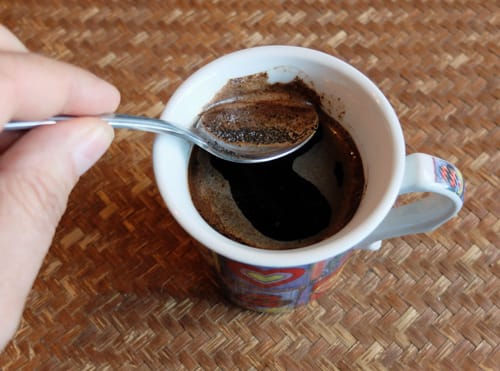
Most people blame the method when their coffee tastes bad without a machine. The real problem is almost always one of three things: wrong water temperature, wrong grind size, or low-quality coffee beans. Fix these three, and your cup improves immediately — no machine required.
The 3 Biggest Mistakes People Make When Brewing Without Equipment
Mistake 1: Using Boiling Water
Water at 100°C burns coffee grounds. It destroys the natural flavour compounds and makes the cup taste harsh and bitter. The correct range is 88–94°C. No thermometer? Boil water, then wait 30 seconds before pouring.
Mistake 2: Using the Wrong Grind Size
Every brewing method needs a specific grind. Using a fine grind in a French press clogs the filter. Using a coarse grind in a channi makes weak, watery coffee. Here's the quick reference:
Method | Grind Size |
Channi / Strainer | Medium-Coarse |
French Press | Coarse |
Pour Over / Cloth Filter | Medium |
Cold Brew | Extra Coarse |
Cowboy Coffee | Coarse |
Mistake 3: Using Stale or Low-Quality Coffee
No brewing method can fix bad coffee. If your beans are stale or your blend is low-grade, the cup will taste flat — machine or no machine. Always check the roast date on the packet. Use coffee roasted within the last 4–6 weeks.
💡 Pro-Tip: Low acidic coffee hides brewing errors better than regular coffee. If your water is slightly too hot or your grind is slightly off, a low acidic Arabica will still taste smooth. A high-acid blend will taste sour or harsh at the same error margin.
The 5 Easy Methods to Brew Coffee at Home Without a Machine
You don't need special equipment to brew good coffee at home without a machine. Each of these 5 methods uses tools you already have in your kitchen. Pick the one that fits your time, your gear, and your taste preference.
Method 1: The Channi / Strainer Method (Most Common in Indian Homes)

What it is: You brew coffee directly in a pot and strain it through a kitchen strainer or channi into your cup.
Best for: Anyone who wants a quick, no-fuss cup. This is the most accessible method in Indian homes.
What you need:
Medium-coarse ground coffee
A small pot or saucepan
A kitchen strainer or channi
Hot water (88–92°C)
How to brew:
Add 2 heaped teaspoons of medium-coarse ground coffee per 200ml of water into the pot
Heat water separately to 88–92°C
Pour hot water over the grounds in the pot
Stir once and let it sit for 3–4 minutes
Pour slowly through the channi into your cup
Press the grounds lightly with a spoon to extract the last of the flavour
Result: A full-bodied, strong cup. Similar to filter coffee but without the decoction step.
⚠️ Common Mistake: Stirring too much after pouring agitates the grounds and makes the coffee bitter. One stir is enough.
Method 2: Pour Over With a Filter or Cloth

What it is: You pour hot water slowly over coffee grounds held in a filter. Gravity does the extraction.
Best for: People who want a clean, bright cup with clear taste notes. Best method for single origin or light roast coffee.
What you need:
Medium ground coffee
A paper filter, cloth filter, or even a clean cotton dupatta/muslin
A cup or jug to collect the brew
Hot water (90–94°C)
How to brew:
Place your filter over the cup or jug
Add 2 teaspoons of medium ground coffee into the filter
Pre-wet the filter with a small amount of hot water — discard this water
Pour 30ml of hot water over the grounds and wait 30 seconds (this is called the bloom)
Slowly pour the remaining water in circles over the grounds
Total brew time: 3–4 minutes
Result: A lighter, cleaner cup. Every flavour note in your coffee comes through clearly.
💡 Pro-Tip: The bloom step releases CO2 trapped in fresh coffee grounds. Skipping the bloom leads to uneven extraction and a flat-tasting cup. Don't skip it.
Method 3: French Press (No Machine, Just a Press)

What it is: You steep coarse ground coffee in hot water, then press a metal plunger down to separate the grounds from the liquid.
Best for: People who want a rich, full-bodied cup with more texture. Closest to a café-style brew without any electricity.
What you need:
Coarse ground coffee
A French press (manual, no electricity needed)
Hot water (88–92°C)
How to brew:
Add 1 tablespoon of coarse ground coffee per 100ml of water into the French press
Pour hot water over the grounds
Stir once, place the lid on (plunger up)
Steep for 4 minutes exactly
Press the plunger down slowly and steadily
Pour immediately — don't let it sit or it over-extracts
Result: Bold, rich, full-bodied coffee. Higher natural oils in the cup compared to filtered methods.
⚠️ Common Mistake: Pressing the plunger too fast forces fine particles through the filter and makes the coffee gritty. Press slow — take at least 20–30 seconds to push it down fully.
Method 4: Cold Brew in a Jar (Zero Heat, Zero Equipment)

What it is: You steep coarse ground coffee in cold water for 12–18 hours. No heat involved at all.
Best for: People who want smooth, low-acid coffee. Cold brew has up to 65% less acidity than hot-brewed coffee — making it the best method for people with sensitive stomachs or acid reflux.
What you need:
Extra coarse ground coffee
A mason jar or any large jar with a lid
Cold or room temperature water
A strainer or cloth to filter after brewing
How to brew:
Add 1 part coffee to 4 parts cold water in your jar (e.g., 50g coffee + 200ml water for concentrate)
Stir to make sure all grounds are wet
Close the jar and place it in the fridge
Wait 12–18 hours (longer = stronger)
Strain through a channi or cloth filter into a clean jar
Store in the fridge for up to 2 weeks
Dilute with water or milk before drinking (1:1 ratio for concentrate)
Result: Smooth, naturally sweet, low-acid coffee. Serve over ice or straight from the fridge.
💡 Example: Cold brew works exceptionally well with Kents Coffee's Ethiopian Groove — a light roast with natural fruity notes. The cold extraction brings out the floral and berry notes without any bitterness.
Method 5: The Cowboy Coffee Method (Boil and Settle)

What it is: You boil ground coffee directly in water, then let the grounds settle to the bottom before drinking.
Best for: Camping, travel, or situations where you have absolutely nothing except a pot and a heat source. Zero equipment needed.
What you need:
Coarse ground coffee
A small pot or saucepan
Water
A heat source
How to brew:
Add 2 tablespoons of coarse ground coffee per 240ml of water into the pot
Heat the water until it just begins to boil
Remove from heat immediately
Stir once and let it sit for 4–5 minutes
Pour very slowly into your cup — the grounds will have settled at the bottom
Stop pouring before you reach the last 10–15ml (that's where the grounds are)
Result: Strong, rustic, no-frills coffee. Not the cleanest cup, but it works anywhere.
⚠️ Common Mistake: Letting the water boil for too long before adding coffee makes the cup taste flat and overcooked. Remove from heat the moment you see bubbles, then add the coffee.
Quick Method Comparison:
Method | Equipment Needed | Brew Time | Best For | Acidity Level |
Channi / Strainer | Pot + strainer | 5–6 min | Everyday home brewing | Medium |
Pour Over | Filter + cup | 4–5 min | Clean, bright cups | Low-Medium |
French Press | French press | 5–6 min | Rich, bold cups | Medium |
Cold Brew | Jar + strainer | 12–18 hrs | Smooth, low-acid cups | Very Low |
Cowboy Coffee | Just a pot | 6–7 min | Travel / no equipment | Medium-High |
Which Coffee Works Best for Home Brewing Without a Machine?
The method matters. But the coffee you put into that method matters more. The best coffee for home brewing without a machine is fresh, low acidic, and 100% Arabica. Here's why each of these factors directly affects your cup.
Why Low Acidic Coffee Performs Better in No-Machine Methods
Machine brewing — drip machines, espresso — uses precise pressure and temperature control to manage extraction. Without a machine, you have less control. Low acidic coffee is more forgiving when your water temperature is slightly off or your brew time runs long.
Here's what happens with high-acid coffee in no-machine brewing:
Water even slightly above 94°C over-extracts acidic compounds
Longer steep times amplify sourness and bitterness
Sensitive stomachs get hit harder — [X]% of regular coffee drinkers report acidity or bloating from standard blends
Low acidic coffee behaves differently:
Natural acids are lower from the start — less room for error
Tastes smoother even at slightly wrong temperatures
Gut-friendly — easier on digestion with or without milk
For no-machine brewing specifically, low acidic coffee isn't a preference — it's a performance advantage.
💡 Example: Kents Coffee is India's first low acidic coffee range — 100% Arabica, single origin from Chikmagalur and Ratnagiri. Every blend is roasted to reduce acidity without losing flavour. For no-machine brewing, this means you get a smooth, full-flavoured cup even if your channi steep runs 30 seconds too long.
What to Look for When Buying Coffee for Home Brewing
Most people pick coffee based on price or brand recognition. For no-machine home brewing, four specific factors determine whether your coffee performs well or wastes your time and money. Here's exactly what to check before you buy.
Roast Level That Suits No-Machine Brewing
Roast level affects how easily coffee extracts. Without a machine's pressure control, you need a roast that works with your method — not against it.
Roast Level | Best No-Machine Method | Flavour Profile | Forgiveness Level |
Light Roast | Pour Over, Cold Brew | Fruity, floral, bright | Low — needs precision |
Medium Roast | French Press, Pour Over, Channi | Balanced, nutty, chocolate | High — most forgiving |
Medium-Dark Roast | French Press, Channi, Cowboy | Bold, earthy, dark chocolate | High |
Dark Roast | Channi, Cowboy Coffee, Cold Brew | Smoky, bitter-sweet, intense | Medium — burns easily |
If you're new to no-machine brewing, start with a medium roast. It extracts evenly across a wider temperature range and steep time. Light roasts punish small errors with sourness. Dark roasts punish them with bitterness.
Kents Coffee roast guide for no-machine brewing:
Ethiopian Groove (Light Roast) → Pour Over, Cold Brew
Panama Vibes (Light-Medium) → Pour Over, French Press
Brazilian Boss (Medium Roast) → French Press, Channi, Cold Brew
Indian Chill (Medium-Dark) → French Press, Channi, Cowboy
Burn Out (Dark Roast) → Channi, Cold Brew, Cowboy Coffee
💡 Pro-Tip: Dark roast is not automatically stronger. Strength comes from your coffee-to-water ratio. A medium roast at a 1:13 ratio brews stronger than a dark roast at 1:17. Don't buy dark roast just for strength — buy it for the flavour profile.
Why Grind Size on the Packet Matters More Than You Think
Most people ignore the grind specification on the packet. This is a direct cause of bad home-brewed coffee.
Here's why it matters:
If a packet says "fine grind" and you use it in a French press, the fine particles slip through the metal filter. You get a gritty, over-extracted, bitter cup. If a packet says "coarse grind" and you use it for pour over, water passes through too fast. You get a weak, under-extracted, sour cup.
What to look for on the packet:
✅ Grind size is clearly stated (coarse / medium / fine / extra coarse)
✅ The method it's intended for is listed (French press / pour over / espresso)
✅ Whole bean option available if you grind at home
❌ No grind information = generic mass-market blend, not optimised for any method
If you're buying pre-ground coffee, match the grind on the packet to your brewing method exactly. No exceptions.
⚠️ Common Mistake: Buying "filter coffee powder" from a supermarket and using it in a French press. Filter coffee powder in India is typically fine-ground and often contains chicory. It clogs French press filters, over-extracts immediately, and produces a bitter, muddy cup. Always check grind size and composition before buying.
Frequently Asked Questions
Can I use instant coffee for these methods?
No. Instant coffee is already brewed and dehydrated — it dissolves in water, it doesn't extract. Putting instant coffee through a French press or channi gives you nothing a spoon and hot water wouldn't. These 5 methods are specifically for ground coffee beans. If you only have instant coffee, just dissolve it in hot water — that's the correct method for instant.
The difference matters: ground coffee brewed through any of these methods gives you natural oils, full flavour compounds, and controlled extraction. Instant coffee gives you none of that.
What is the easiest no-machine coffee method for beginners?
The channi / strainer method. You need nothing except a pot, hot water, ground coffee, and a kitchen strainer — all already in your home. No extra equipment to buy. No technique to learn. Brew time is under 5 minutes.
Start here:
2 tablespoons of medium-coarse ground coffee
200ml of water rested 45 seconds off boil
Strain into your cup
Done
Once you're consistent with the channi method, move to French press or pour over for a cleaner, more refined cup.
Does coffee brewed without a machine have less caffeine?
Not significantly. Caffeine extraction depends on water temperature, brew time, and grind size — not on whether a machine is involved. A French press brewed at 90°C for 4 minutes extracts roughly the same caffeine as a drip machine using the same coffee and ratio.
The real caffeine variables:
Factor | Effect on Caffeine |
Grind size (finer) | More caffeine extracted |
Water temperature (higher) | More caffeine extracted |
Brew time (longer) | More caffeine extracted |
Coffee-to-water ratio (more coffee) | More caffeine per cup |
Bean type (Robusta vs Arabica) | Robusta has 2x the caffeine of Arabica |
If you want more caffeine from no-machine brewing: use a finer grind, brew slightly longer, or increase your coffee ratio. You don't need a machine for a high-caffeine cup.
💡 Pro-Tip: Cold brew — despite using no heat — actually extracts more caffeine than hot methods when brewed as a concentrate (1:4 ratio). Cold brew concentrate can have 2–2.5x the caffeine of a standard hot-brewed cup. Always dilute before drinking.
Is low acidic coffee better for people with acid reflux?
Yes — and the difference is measurable, not just a marketing claim. Standard coffee has a pH of approximately 4.2–4.5. Low acidic Arabica coffee sits closer to 4.7–5.1 — meaningfully less acidic.
For people with acid reflux, GERD, or sensitive stomachs, this matters because:
Lower acidity means less stimulation of stomach acid production
Fewer chlorogenic acids = less irritation to the oesophageal lining
Smoother extraction means less of the harsh compounds that trigger reflux
The combination that works best for acid reflux sufferers:
Low acidic 100% Arabica coffee (not Robusta)
Cold brew method — cold extraction reduces acidity by up to 65% vs hot brewing
Never on an empty stomach — eat something small first
[X]% of people with self-reported acid reflux symptoms switched to low acidic coffee and reported reduced discomfort within the first 7 days.
⚠️ Common Mistake: Assuming "dark roast = less acidic." Dark roasts do have slightly lower chlorogenic acid levels than light roasts. But the bean variety and origin matter far more than roast level for acidity. A dark roast Robusta is still significantly more acidic than a medium roast low-acid Arabica. Check the bean type first, roast level second.
How fine should I grind coffee for home brewing without a machine?
It depends entirely on your method. There is no single correct grind size for no-machine brewing — each method requires a different particle size for correct extraction.
Here's the complete grind guide:
Method | Grind Size | Visual Reference | Why |
Pour Over | Medium | Table salt | Water flows at the right speed for 3–4 min extraction |
Channi / Strainer | Medium-Coarse | Rough sand | Prevents grounds passing through strainer holes |
French Press | Coarse | Sea salt / raw sugar | Prevents clogging metal filter, stops over-extraction |
Cold Brew | Extra Coarse | Coarse breadcrumbs | 12–18 hr steep needs slow extraction to avoid bitterness |
Cowboy Coffee | Coarse | Sea salt | Needs to settle cleanly at the bottom of the pot |
The rule: longer brew time = coarser grind. Shorter brew time = finer grind.
Cold brew brews for up to 18 hours — it needs the coarsest grind. Pour over brews in 4 minutes — it needs medium grind to extract fully in that window.
If you're buying pre-ground coffee, check the packet for the intended method. If you're grinding at home, set your grinder one notch coarser than you think you need — you can always adjust finer, but over-extraction from too-fine a grind ruins the cup immediately.
💡 Example: Kents Coffee offers method-specific grind options on every ground coffee product — French press grind, espresso grind, and pour over grind are listed separately. You don't need to guess or own a grinder. Select your method when ordering and the correct grind ships to you. [Shop ground coffee by method here →]


Comments