The Best Time to Drink Coffee for Maximum Energy & Focus


The best time to drink coffee is between 9:30 AM and 11:30 AM. This is when your body's natural alertness hormone drops and caffeine can actually do its job.
Most people drink coffee the moment they wake up. That's the wrong move. Your body is already producing cortisol — a hormone that keeps you alert — for the first 60 to 90 minutes after waking. Drinking coffee during this window wastes the caffeine and builds tolerance faster.
The 90-Minute Rule: Why You Should Wait Before Your First Cup
Wait 90 minutes after waking before your first cup. Here's why this works:
Cortisol peaks right after you wake up. It naturally spikes within 15–30 minutes of waking.
Caffeine and cortisol compete. When both are high, caffeine adds little benefit.
Waiting lets cortisol drop. Once it drops, caffeine fills the gap and gives you a real, noticeable boost.
It also reduces tolerance build-up. You'll need fewer cups to feel the same effect over time.
🚫 Common Mistake: Drinking coffee within 30 minutes of waking. You get the jitters, not the focus. The caffeine hits when you don't need it and wears off when you do.
Your Cortisol Window Explained in Plain Terms
Cortisol is your body's built-in alertness system. It follows a daily rhythm called the cortisol awakening response (CAR).
Here's how it works:
6:00–8:00 AM (typical wake time): Cortisol spikes. You're naturally alert.
8:00–9:30 AM: Cortisol starts dropping. Energy begins to dip.
9:30–11:30 AM: Cortisol is at a lower level. This is your coffee window. Caffeine now works with your biology, not against it.
12:00–1:00 PM: Cortisol drops again. A second cup here can work — covered in the next section.
Timing your coffee to your cortisol curve is the single most effective change you can make to your caffeine routine.
💡 Pro-Tip: Don't know your cortisol window? A simple rule — wait 90 minutes from when you wake up, every day. That's your starting point.
Why Your Coffee Timing Is Killing Your Energy
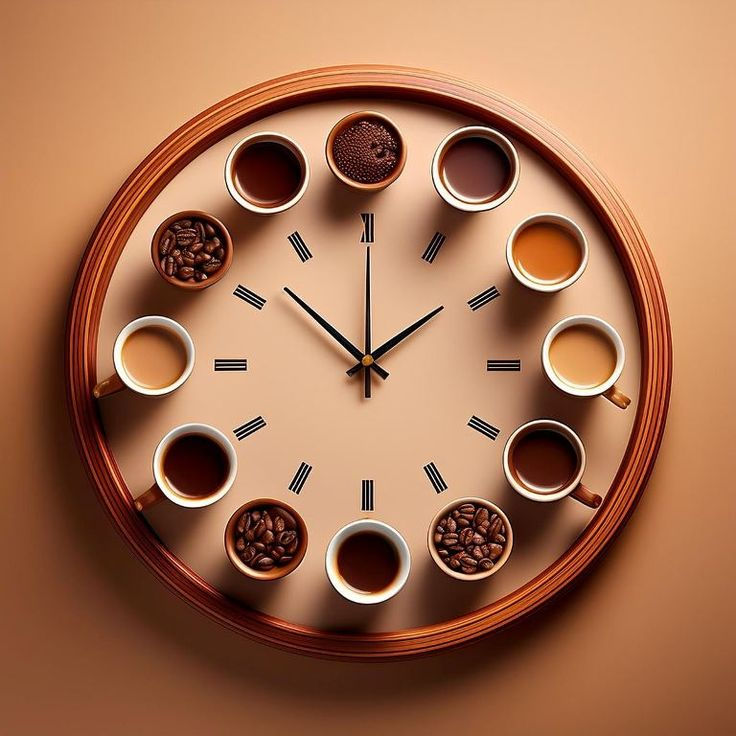
You're not drinking too much coffee. You're drinking it at the wrong time. Poor coffee timing doesn't just waste your caffeine — it actively works against your energy levels throughout the day.
The problem isn't the coffee. It's the clock.
Most Coffee Drinkers Report an Afternoon Crash — Here's Why
The afternoon crash is not random. It's a direct result of mistimed caffeine in the morning.
Here's what happens:
You drink coffee too early (within 30–60 minutes of waking).
Cortisol is already high. The caffeine adds stimulation on top of stimulation.
Your body compensates by suppressing adenosine receptors harder.
By early afternoon, the caffeine wears off and adenosine floods back in — all at once.
Result: a crash that's worse than if you hadn't had coffee at all.
A large share of regular coffee drinkers report consistent energy dips between 1–3 PM — most of them drink their first cup before 8 AM.
🚫 Common Mistake: Treating the afternoon crash as a signal to drink more coffee. It's actually a signal that your morning timing was off.
Mistimed Caffeine Reduces Your Focus Window — Not Extends It
Caffeine has a half-life of roughly 5–6 hours. If you drink coffee at 7 AM, half the caffeine is still in your system at noon — but the alertness peak is already gone.
Here's what mistimed caffeine actually does to your focus:
Peak focus arrives too early — during your cortisol spike, when you didn't need the boost.
The focus window closes by 10–11 AM — right before your most productive work hours begin.
You feel foggy from 11 AM onward — not because caffeine is gone, but because the peak effect has passed.
Shifting your first cup to 9:30 AM moves your peak focus window to 10 AM–12:30 PM — exactly when most knowledge work happens.
The Hidden Cost of Caffeine Tolerance from Poor Timing
Tolerance is the real long-term damage of bad coffee timing.
When you drink coffee during high-cortisol windows repeatedly, your body adapts:
Your adenosine receptors multiply. More receptors = more tiredness without caffeine.
You need more caffeine to feel the same effect. One cup becomes two. Two becomes three.
Your baseline energy without coffee drops. You're not energized — you're just at normal.
Caffeine tolerance can begin forming in as little as 1–3 days of consistent use at the wrong times. It takes about 7–12 days of reduced or correctly timed intake to reset.
The fix is not a caffeine detox. It's fixing your timing first.
💡 Pro-Tip: If you need 3+ cups a day just to feel functional, your timing is likely the problem — not your caffeine dose. Start by pushing your first cup 30 minutes later each day until you hit the 90-minute post-wake mark.
The 3 Proven Time Windows for Maximum Energy & Focus
Not all coffee hits the same. The difference is usually timing, not the beans. There are 3 specific time windows where caffeine works with your body's chemistry — not against it. Drink outside these windows and you're burning caffeine for no real return.
Here's each window, what's happening in your body, and how to use it.
Window 1 — Morning (9:30 AM–11:30 AM): The Peak Cortisol Drop Zone
This is your primary coffee window. It's the most important one.
What's happening in your body:
Cortisol peaks within 30 minutes of waking and starts dropping by 9–9:30 AM.
Adenosine (the tiredness chemical) begins building up again.
Your brain is ready for caffeine to step in and block adenosine effectively.
Why this window works:
Caffeine hits when cortisol is dropping — so it fills the gap instead of competing.
You get a clean, focused energy boost with no cortisol + caffeine overlap.
The stimulant effect lasts through your peak productive hours (10 AM–1 PM).
How to use it:
Wake up. Drink water first (300–500 ml).
Wait 90 minutes from your wake time.
Brew your first cup. Keep it black or low-sugar for faster absorption.
This single shift — from 7 AM to 9:30 AM — is the highest-impact change you can make to your coffee routine.
💡 Pro-Tip: If you wake at 6 AM, your window opens around 7:30–8:00 AM — not 9:30 AM. The 90-minute rule is relative to your wake time, not the clock.
Window 2 — Early Afternoon (1:00 PM–2:00 PM): The Post-Lunch Slump Fix
This is your optional second window. Use it only if you need it.
What's happening in your body:
After lunch, blood flow shifts to digestion. Brain activity slows.
Cortisol hits a secondary dip between 1–3 PM.
Adenosine has been building since morning and hits a noticeable peak.
Why this window works:
A small caffeine dose here directly targets the adenosine spike causing your slump.
It extends your productive window by 2–3 hours into the afternoon.
It clears your system before 5–6 PM, so it doesn't disrupt sleep.
How to use it:
Limit the dose — half a cup or a smaller brew is enough.
Drink it by 2:00 PM at the latest. Caffeine's 5–6 hour half-life means a 2 PM cup clears by 7–8 PM.
Avoid milk-heavy drinks here — they slow absorption during an already sluggish digestion phase.
🚫 Common Mistake: Drinking a full second cup at 3 PM because "the afternoon slump hit hard." That cup will still be half-active in your system at 8–9 PM and will cut into your sleep quality directly.
Window 3 — Pre-Workout (30–60 Min Before): The Performance Window
This window is for physical output — gym, run, sport, or any high-effort activity.
What's happening in your body:
Caffeine takes 30–45 minutes to reach peak concentration in your bloodstream.
At peak, it increases adrenaline, reduces perceived effort, and improves muscle endurance.
It also improves reaction time and short-term power output.
Why this window works:
Caffeine timed to your workout peak means the stimulant effect aligns with physical exertion.
Studies show caffeine can improve endurance performance by 2–4% and reduce perceived exertion significantly.
You use the energy output productively — no crash, because the physical activity burns through the stimulation.
How to use it:
Drink coffee 30–45 minutes before you start training.
Keep it black. Milk slows absorption — you want fast uptake before a workout.
Don't combine with pre-workout supplements containing caffeine. You'll double-dose without realizing it.
If you train in the evening, this is your only recommended coffee window after 4 PM — and only if your workout ends by 7 PM.
💡 Pro-Tip: If your workout is under 30 minutes, skip the pre-workout coffee. The caffeine will peak after you're already done.
How to Time Your Coffee for Your Specific Routine
Generic coffee timing advice doesn't account for your schedule. A 6 AM waker and a 9 AM waker have completely different optimal windows. The goal is to build a personal coffee timing map based on your wake time, energy pattern, and daily blocks.
Here's the 4-step process to do that.
Step 1 — Identify Your Wake-Up-to-Cortisol Gap
Your cortisol gap is the period after waking when your body is still naturally alert. Caffeine during this window is wasted.
How to find your gap:
Note your average wake time over the past week.
Add 90 minutes. That's your earliest first-cup time.
This is your personal cortisol gap — not a fixed clock time.
Examples by wake time:
Wake Time | First Coffee Window Opens |
5:30 AM | 7:00 AM |
6:30 AM | 8:00 AM |
7:30 AM | 9:00 AM |
9:00 AM | 10:30 AM |
Your gap shifts if your sleep schedule changes. Recalculate any time your wake time changes by more than 45 minutes.
💡 Pro-Tip: If you wake up at different times on weekdays vs. weekends, your cortisol rhythm gets disrupted — this is called social jetlag. Stick to a consistent wake time to keep your coffee window predictable and effective.
Step 2 — Map Your Energy Dips Using a 3-Day Log
You can't time coffee well without knowing when your energy actually drops. Most people guess. You need data.
How to run your 3-day energy log:
Do this before changing your coffee habits. You want your baseline, not an adjusted version.
Every 90 minutes from wake time, rate your energy on a scale of 1–10.
Note what you were doing at each check-in (working, eating, commuting, exercising).
Mark the two lowest points in each day. These are your dip windows.
Do this for 3 consecutive days. Look for patterns.
What to look for:
A consistent dip between 10–11 AM? Your morning cortisol drops earlier than average.
A hard crash between 1–3 PM? Your post-lunch slump is significant and needs a second window.
A dip around 5–6 PM? You may benefit from the pre-workout window if you train in the evening.
Your two lowest-energy points each day are your two coffee windows. Everything else is noise.
🚫 Common Mistake: Logging energy after you've already changed your coffee timing. You'll map the effect of caffeine, not your natural rhythm. Do the log first, adjust coffee second.
Step 3 — Match Each Window to Your Work or Workout Block
Once you know your dip windows, align your coffee timing to what you need to do — not just when you feel tired.
The matching framework:
Energy Dip Window | What You Need | Coffee Timing |
9:30–11:30 AM | Deep focus work | First cup 30 min before your focus block |
1:00–2:00 PM | Meetings or calls | Half cup at 1:00 PM sharp |
5:00–6:30 PM | Gym or physical output | Full cup 30–45 min before training |
Rules for matching:
Always drink coffee 20–30 minutes before the block you need it for — not during.
If two dips are close together (under 2 hours apart), pick the earlier one. Don't stack cups.
If a work block requires creativity over focus, a smaller dose works better than a full cup.
Step 4 — Adjust for Chronotype (Early Bird vs. Night Owl)
Your chronotype is your biological sleep-wake preference. It directly affects when your cortisol peaks — and therefore when your coffee windows fall.
Early Bird (Morning Chronotype):
Natural wake time: 5:00–7:00 AM
Cortisol peaks early and drops fast
First coffee window: 6:30–8:30 AM
Energy dip hits earlier — by 11 AM for most
Second window: 12:00–1:00 PM at the latest
Avoid coffee after 1:30 PM — sleep onset is earlier, half-life overlap is real
Night Owl (Evening Chronotype):

Natural wake time: 8:00–10:00 AM
Cortisol peak is delayed — rises slower, drops later
First coffee window: 10:00 AM–12:00 PM
Productive peak runs later into the afternoon
Second window: 2:00–3:00 PM is safe
Can tolerate a later last cup without major sleep disruption
If you're in between (Intermediate Chronotype):
Use the 90-minute rule as your baseline.
Your windows will fall close to the "standard" 9:30 AM and 1:00 PM times.
Your chronotype doesn't change with willpower. Work with it, not against it.
💡 Pro-Tip: Most people don't know their chronotype. A simple test — on a free day with no alarm, note when you naturally wake up and when you feel most alert. That's your chronotype in action. Build your coffee map around that, not your work schedule.
5 Common Coffee Timing Mistakes You Are Probably Making
Most people don't have a caffeine problem. They have a timing problem. The 5 coffee timing mistakes below are responsible for most afternoon crashes, tolerance build-up, and poor sleep — and most people make at least 3 of them daily.
Check how many apply to you.
Mistake 1 — Drinking Coffee Immediately After Waking Up
This is the most common mistake. And it's the one that sets up every other problem in your day.
What's actually happening:
Cortisol is at its highest point within 30 minutes of waking.
Caffeine doesn't add energy on top of cortisol. It competes with it.
Your body reads the overlap as excess stimulation and downregulates both.
Result: higher tolerance, faster crash, and less real alertness.
The fix:
Wait 90 minutes after waking before your first cup.
Drink water immediately after waking instead — 300–500 ml rehydrates your system and supports natural cortisol function.
🚫 The real cost: Every day you drink coffee in your cortisol window, you're training your body to need more caffeine to feel the same effect. Tolerance compounds over weeks.
Mistake 2 — Using Coffee to Replace Sleep
Coffee masks tiredness. It does not fix it.
Here's the biology:
Sleep is when adenosine clears from your brain. Caffeine only blocks adenosine receptors temporarily.
When caffeine wears off, all the adenosine it blocked comes back at once.
If you're sleep-deprived, that rebound is severe — the crash is harder and longer than normal.
No amount of coffee compensates for less than 6 hours of sleep on a consistent basis.
Signs you're using coffee to replace sleep:
You need coffee before you can speak or function in the morning.
You feel mentally foggy even after 2–3 cups.
You crash hard in the afternoon regardless of timing.
You can't get through a day without caffeine without a headache.
The fix is not better coffee. It's more sleep.
Coffee works best as a performance tool on top of adequate rest — not as a substitute for it.
💡 Pro-Tip: If you're consistently sleeping under 6.5 hours, fix sleep first. Then optimize coffee timing. Doing it in reverse order delivers half the result.
Mistake 3 — Drinking Past 2 PM and Wrecking Your Sleep Quality
Caffeine has a half-life of 5–6 hours. This is not a guideline. It's pharmacology.
What this means in practice:
Last Cup Time | Half Still Active At | Fully Cleared By |
2:00 PM | 7:00–8:00 PM | 12:00–2:00 AM |
3:00 PM | 8:00–9:00 PM | 1:00–3:00 AM |
4:00 PM | 9:00–10:00 PM | 2:00–4:00 AM |
If you sleep at 10:30 PM and had coffee at 4 PM, half that caffeine is still blocking adenosine when you're trying to fall asleep. You may fall asleep — but your deep sleep stages are shorter and less restorative.
You won't always feel it. But your energy the next day reflects it.
🚫 Common Mistake: Thinking "I can sleep fine after evening coffee" means caffeine isn't affecting you. Sleep quality and sleep onset are different things. Caffeine can let you fall asleep while still reducing slow-wave sleep by a measurable amount.
The fix: Set a hard cutoff at 2:00 PM. If you genuinely need a focus boost after that, use a half-dose and only during the 1:00–2:00 PM window.
Mistake 4 — Ignoring Meal Timing When Pairing Coffee
What you eat — and when — directly affects how caffeine hits you.
Key interactions:
Coffee on an empty stomach: Caffeine absorbs faster but also spikes cortisol and stomach acid more sharply. This causes jitters, anxiety, and GI discomfort in many people.
Coffee right after a heavy meal: Fat and protein slow gastric emptying. Caffeine absorption slows by 30–45 minutes. You feel the effect later and weaker.
Coffee with high-sugar food: The sugar spike and caffeine combine to create a short, intense energy burst followed by a faster crash.
The optimal pairing:
Have a light meal or snack 30–45 minutes before your coffee.
Avoid pairing coffee with high-sugar breakfasts (white bread, fruit juice, pastries).
A small protein-based snack — eggs, nuts, yogurt — before your cup slows the cortisol spike and smooths the caffeine curve.
Mistake 5 — Stacking Multiple Cups Without a Gap
Two cups back-to-back is not twice the focus. It's twice the tolerance damage.
What happens when you stack cups:
Your adenosine receptors get overwhelmed and begin downregulating faster.
Blood pressure spikes temporarily — you feel alert but also tense or anxious.
The second cup doesn't extend the first cup's benefit. It just front-loads more caffeine into a window that's already saturated.
The combined crash when both doses wear off is significantly harder.
The minimum gap between cups is 2 hours. Less than that and you're stacking on top of an active dose.
Signs you're stacking too often:
You drink 3+ cups before noon.
Each cup feels weaker than the last.
You feel wired but not focused — alert but scattered.
You're irritable or anxious by mid-morning.
The fix:
Cap yourself at 2 cups per day during your two optimal windows.
If you need a third, it's a sleep or timing problem — not a caffeine shortage.
💡 Pro-Tip: If one well-timed cup of quality coffee doesn't give you noticeable focus, your tolerance is already built up. Take a 5–7 day break from caffeine or cut to one small cup per day. Reset, then restart with correct timing.
What Type of Coffee Works Best for Each Time Window
Timing is the foundation. But what you drink inside that window also matters. The wrong roast, the wrong preparation, or the wrong add-ins can slow absorption, reduce caffeine impact, or shorten your focus window — even if your timing is perfect.
Here's what to drink, and when.
Light Roast vs. Dark Roast — Which Has More Caffeine?
This is one of the most misunderstood facts in coffee. Most people assume dark roast = more caffeine. It's the opposite.
The reality:
Roasting burns off caffeine. The longer the roast, the more caffeine is lost.
Light roast retains more caffeine per bean than dark roast.
However, dark roast beans expand during roasting — so they're less dense.
If you measure by weight, the difference is small. If you measure by scoops, light roast wins clearly.
Practical caffeine output by roast:
Roast Type | Caffeine per Cup (Approx.) | Best For |
Light Roast | Higher (measured by scoop) | Sustained, clean focus |
Medium Roast | Balanced | All-purpose energy |
Dark Roast | Lower per scoop | Flavour-forward, moderate boost |
Which roast fits which window:
Morning window (9:30–11:30 AM): Light or medium roast. You want sustained caffeine output for a long focus block.
Afternoon window (1:00–2:00 PM): Medium or dark roast. Lower caffeine load prevents sleep disruption.
Pre-workout window: Dark roast or espresso-based. Fast, concentrated hit before physical output.
The roast you choose should match the duration and intensity of the block ahead — not just your taste preference.
💡 Pro-Tip: If you drink dark roast exclusively and still feel under-caffeinated, switch to a light or medium roast before assuming you need more cups. The roast — not the quantity — may be the gap.
Black Coffee vs. Milk-Based Drinks — Impact on Absorption Speed
How you prepare your coffee changes how fast caffeine enters your bloodstream. This directly affects whether it peaks at the right time.
Black coffee:
Absorbs fastest — caffeine reaches peak blood concentration in 30–45 minutes.
No fat or protein to slow gastric emptying.
Ideal when you need caffeine to hit quickly — pre-workout or tight morning windows.
Higher acidity — can cause GI discomfort on a completely empty stomach.
Milk-based drinks (lattes, flat whites, cappuccinos):
Fat and protein in milk slow absorption by 15–30 minutes.
Caffeine peak is delayed but slightly more gradual — less of a spike, less of a crash.
Better tolerated on an empty stomach.
Not ideal pre-workout — you want fast uptake before physical exertion, not a delayed curve.
Sugar-added drinks (flavoured lattes, sweetened cold brews):
Sugar causes a separate insulin response layered on top of caffeine stimulation.
Short, sharp energy peak followed by a faster crash.
The sugar crash and caffeine drop often land at the same time — amplifying the dip.
Avoid these in all three windows if energy stability is the goal.
Match your preparation to your window:
Window | Best Preparation |
Morning focus block | Black or light milk, no sugar |
Afternoon slump | Small milk-based drink, no sugar |
Pre-workout | Black, no milk, no sugar |
🚫 Common Mistake: Drinking a large sweetened latte as your morning coffee. The milk delays the caffeine hit and the sugar crash lands right in the middle of your focus block — usually around 11 AM.
Single Origin vs. Blend — Does It Affect Focus Quality?
This isn't about snobbery. There's a functional difference worth knowing.
Single Origin:
Coffee sourced from one farm, region, or country.
Flavour and caffeine profile is consistent and traceable.
Generally processed with more care — lower defect rate, cleaner cup.
You know what you're getting in terms of caffeine output and acidity.
Better for people who are caffeine-sensitive or tracking their intake carefully.
Blends:
Coffee mixed from multiple origins to hit a target flavour profile.
Caffeine content can vary batch to batch depending on the mix.
Often designed for consistency in taste — not necessarily in caffeine output.
Commercial blends (supermarket grade) frequently mix Robusta for cost — higher caffeine, harsher energy hit with more jitters.
Specialty blends from roasters are more controlled and predictable.
Does it affect focus quality directly?
Not in a dramatic way — but consistency does. If your caffeine output varies from cup to cup, your energy windows become unpredictable. Single origin or well-sourced specialty blends give you a more reliable caffeine curve.
If you're building a structured coffee timing routine, consistency in your beans matters as much as consistency in your timing.
💡 Pro-Tip: If your current coffee gives you jitters, anxiety, or a fast crash — check the bean source before blaming your timing. A high-Robusta commercial blend delivers caffeine aggressively. Switching to a spcialty Arabica single origin often solves the problem without changing your timing at all.
What to Look for When Buying Coffee for Energy & Focus
Most people pick coffee based on taste or price. If energy and focus are the goal, you need to buy based on different criteria entirely. The right coffee for energy and focus is defined by its caffeine consistency, roast level, bean grade, and how well it matches your specific time window.
What to look for on the label or product page:
Bean type declared: Arabica, Robusta, or a blend. Robusta has roughly twice the caffeine of Arabica. A blend without a ratio listed gives you no control over your dose.
Roast level listed: Light, medium, or dark. This tells you the approximate caffeine range per cup.
Brew recommendation: The suggested dose (grams per cup) affects how much caffeine ends up in your cup. A brand that gives you this number is being transparent about output.
Single origin or blend: Single origin gives consistent caffeine output batch to batch. An unlisted blend varies.
What a good label tells you vs. a bad one:
Good Label | Bad Label |
"100% Arabica, Light Roast | "Premium coffee blend" |
Origin listed (e.g., Ethiopia, Brazil) | No origin information |
Brew ratio recommended | No brewing guidance |
Roast level specified | "Rich and bold" with no roast info |
If a brand can't tell you what's in the bag, you can't control what goes in your cup.
💡 Pro-Tip: If caffeine sensitivity is a concern, choose 100% Arabica and stick to medium roast. It gives you a predictable, moderate caffeine output — easier to time and less likely to cause jitters or anxiety.
Roast Level and Its Effect on Alertness
Roast level is the fastest filter you can apply when buying for energy and focus. It tells you the speed, intensity, and duration of the caffeine effect.
How each roast affects alertness:
Light Roast:
Highest caffeine retention per scoop.
Clean, gradual energy curve — peaks later, lasts longer.
Lower acidity impact on the gut compared to perception (actually less bitter, not more).
Best for: long focus blocks, morning work sessions, cognitive-heavy tasks.
Medium Roast:
Balanced caffeine output.
Moderate peak — not too sharp, not too slow.
Most versatile roast for daily use.
Best for: morning window and afternoon window equally.
Dark Roast:
Lower caffeine per scoop due to extended roasting.
Faster perceived hit — more concentrated flavour, slightly quicker but shorter curve.
Higher bitterness, more oils — can be harder on an empty stomach.
Best for: pre-workout window, espresso-based drinks, situations where you need a fast boost over a short period.
Buying rule: Match roast to window duration. Long block ahead → light or medium. Short, intense output needed → dark or espresso.
🚫 Common Mistake: Buying dark roast because it "tastes stronger" and assuming it has more caffeine. Stronger flavour does not equal higher caffeine. You may be getting less caffeine per cup than a light roast — and building tolerance on fewer milligrams.
Why Specialty-Grade Beans Deliver Cleaner Energy Than Commercial Blends
Specialty grade is not a marketing term. It's a measurable standard.
What specialty grade means:
Scored 80 or above on the Specialty Coffee Association (SCA) 100-point scale.
Evaluated for defects, moisture content, bean size consistency, and cup quality.
Grown in specific altitude ranges and climates that affect flavour and chemical composition.
Sourced, processed, and roasted with documented traceability.
Why this matters for energy and focus specifically:
Fewer defective beans = cleaner cup. Defective beans introduce harsh compounds that contribute to jitters and bitterness — not caffeine.
Consistent processing = predictable caffeine output. You get the same energy curve every time you brew.
Lower Robusta content. Most commercial blends use Robusta to cut costs. Robusta delivers a harsh, spike-and-crash caffeine profile. Specialty Arabica is smoother and more sustained.
No fillers or additives. Commercial ground coffee sometimes contains chicory or other fillers that dilute caffeine content without telling you.
The difference in energy experience:
Specialty Grade Arabica | Commercial Blend |
Smooth, sustained alertness | Sharp spike, faster crash |
Predictable cup-to-cup | Variable caffeine output |
Less jitters, less anxiety | Higher jitter risk (Robusta content) |
Traceable roast and origin | No origin transparency |
Cleaner beans produce cleaner energy. The quality of your focus is partially determined by the quality of your beans.
Kents Coffee Products That Match Each Time Window
You don't need a different brand for each window. You need the right roast from the right source, matched to the right time.
Here's how Kents Coffee products map directly to the 3 energy windows:
Window 1 — Morning Focus (9:30–11:30 AM)
Ethiopian Groove — Light roast, single origin Ethiopia.
High caffeine retention. Clean, fruit-forward flavour.
Sustained energy curve — ideal for long focus blocks.
Best brewed as pour over or filter for maximum caffeine extraction.
Brazilian Boss — Medium roast, single origin Brazil.
Balanced caffeine output. Nutty, smooth profile.
All-purpose morning cup — works for focus work and general alertness equally.
Suits both black and light milk preparation.
Window 2 — Afternoon Slump Fix (1:00–2:00 PM)
Indian Chill — Medium roast, Indian single origin.
Moderate caffeine. Low acidity — easier on the stomach post-lunch.
Half-cup dose in this window keeps you functional without sleep disruption.
Works well as a small black brew or a short milk-based drink.
Window 3 — Pre-Workout (30–60 Min Before Training)
Burn Out — Dark roast, high-intensity blend.
Concentrated caffeine hit. Fast absorption when brewed black.
Designed for physical output — not extended desk focus.
Brew strong, drink black, time it 35–40 minutes before training starts.
Pour Over Bag Range — All Windows
Kents Coffee pour over bags are single-serve, pre-dosed, and origin-listed.
No guesswork on caffeine dose. Same output every time.
Ideal for office use, travel, or any situation where you can't control your brew setup.
Available in light, medium, and dark roast variants — match to your window on the go.
💡 Pro-Tip: If you're new to timing your coffee, start with KENTS COFFEE ----- Brazilian Boss at 9:30 AM for one week before adding a second window. One well-timed, quality cup will outperform three poorly timed commercial cups every time.


Comments